The details nobody asks for
Why the smallest decisions in a product end up being the ones people remember.
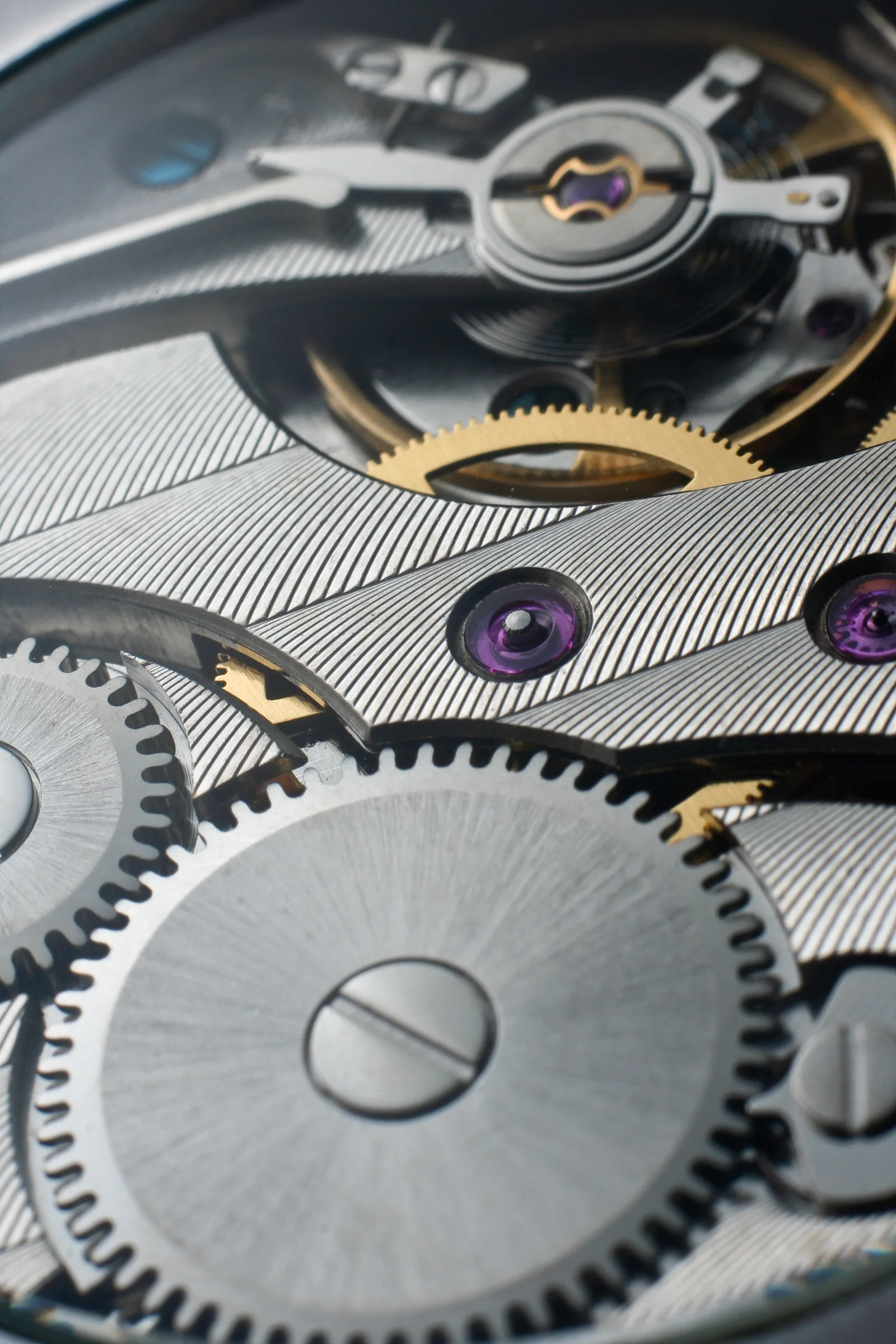
No one has ever opened an app and said, "I love how this button responds when I press it." They will never write it in a review. They will not mention it to a friend. And yet, if you took that response away, they would feel the absence immediately, even if they could not tell you what changed.
That gap, between what people notice and what people feel, is where I think most of the real work of making things lives.
The part of the work no one asks for
When you set out to build something, the obvious requirements arrive on their own. A customer tells you what they need. A deadline tells you what has to exist by Friday. A competitor tells you what the market already expects. These are the things on the list, and a good team will deliver them.
But there is a second list that nobody writes down. It is the list of things no one would ever think to request: the exact moment a menu should finish opening, the weight of an icon next to the type beside it, the colour that shows for a fraction of a second while one page hands off to the next, the sentence that appears when something goes wrong.
No stakeholder will file a ticket for these. No interview will surface them. They exist only if someone decides they matter, usually long after everyone else has moved on.
I have come to believe that this second list is not a finishing touch. It is the product.
Why small things are not small
A detail on its own is almost nothing. An arrow drawn half a pixel too thin. A transition that runs forty milliseconds too long. A line of text that leaves one word stranded on its own line. Any one of them is easy to dismiss, and in isolation it would be fair to.
The trouble is that people never experience details in isolation. They experience all of them at once, continuously, for as long as they use the thing you made. A hundred small decisions, each reasonable on its own, add up to a feeling. Either the product feels considered, or it feels assembled.
People are remarkably good at sensing that difference and remarkably bad at explaining it. They will say something feels "solid," or "calm," or "cheap," without being able to point to why. What they are reacting to is the sum of a thousand choices they never consciously saw.
That is why I do not think of details as polish applied at the end. Polish suggests a surface, something you add once the real work is done. Details are structural. They are the accumulated evidence of how much care went into everything underneath.
Restraint is a detail too
It would be easy to read all of this as an argument for adding more: more animation, more texture, more flourishes. It is closer to the opposite.
Most of the details that matter are about removal. Taking out the label that the icon already explains. Cutting the sentence that repeats the one before it. Resisting the second accent colour. Letting a page be quiet so that the one thing on it can be heard.
Every element you add asks for a little of someone's attention. The discipline is in spending that attention only where it earns its place. Sometimes the most careful thing you can do is make sure nothing is there at all.
This is the part that takes the longest, because adding is fast and judging is slow. Anyone can put something on a screen. Deciding, with conviction, that it should not be there requires understanding the whole.
Obsession is mostly patience
From the outside, caring about tiny things can look like perfectionism, a kind of anxious inability to let go. In practice, it is much less dramatic than that. It is mostly patience.
It is looking at the same transition fifty times until you can feel exactly where it drags. It is reading a paragraph out loud and noticing the one word that does not belong. It is opening the thing you built on a small phone, in bad light, on a slow connection, and seeing it the way a stranger would instead of the way you imagined it.
None of that is glamorous. Most of it produces changes so small that no one will ever know they happened. That is the point. The goal is not for anyone to notice the work. The goal is for the work to disappear, leaving only the sense that the thing simply feels right.
Details are a form of respect
There is another way to think about all of this, and it is the one that keeps me honest. Every detail is a decision about someone you will probably never meet.
When an error message explains what happened in plain language instead of a code, that is a decision about the person reading it, who is likely already having a bad moment. When a page loads its most important part first, that is a decision about someone on a slow connection who has somewhere else to be. When text is large enough to read without squinting, that is a decision about someone whose eyes are tired at the end of a long day.
None of these people will thank you. Most of them will never know a choice was made at all. But they will feel, in a way that is hard to name, whether the thing in front of them was made with them in mind or made despite them.
I think that is what people are really responding to when they say a product feels good. Not the polish itself, but what the polish implies: that someone, somewhere, took their time seriously.
Where it actually matters
There is a fair objection to all of this. Time is finite. If you spend it refining the timing of a menu, you are not spending it on something more important. And sometimes that trade is genuinely wrong. A product that is beautiful and useless is still useless.
So I try to be deliberate about where the care goes. The details worth obsessing over are the ones people touch most often: the first thing they see, the thing they do a hundred times a day, the moment when something fails and they are already frustrated. Those are the places where a small improvement repeats itself thousands of times, and where carelessness is felt the most.
Care is not something you spread evenly. It is something you aim.
The difference people feel
Attend to those details with enough care and something changes. They stop being small. They stop being individual decisions and start to become a character, a consistent sense that someone thought about you before you arrived.
That feeling is rarely what gets something noticed. Features do that. Price does that. Timing does that. But it is very often what makes people stay, and what makes them reach for it again without thinking. It is the quiet, defining difference between a product people use and a product people love.
Nobody will ask you for it. That is exactly why it is worth doing.